More Than Drum Lessons
Great lessons should do more than teach technique. They should help students feel capable, creative, and excited to keep improving.
Every Student Learns Differently
There is no single teaching method that works for everyone. I adjust the pace, structure, and material based on each student's personality, goals, and learning style.
Confidence Comes Through Progress
Students build confidence when they can recognize their own improvement. I break skills into manageable steps and make sure progress is noticed and celebrated.
Strong Fundamentals Matter
Good technique, timing, coordination, and music-reading skills create a foundation that allows students to play more freely and confidently.
Learning Should Be Fun
Students are more motivated when lessons connect with music they genuinely enjoy. I balance structured learning with songs, styles, and goals that keep them engaged.
What Students Will Learn
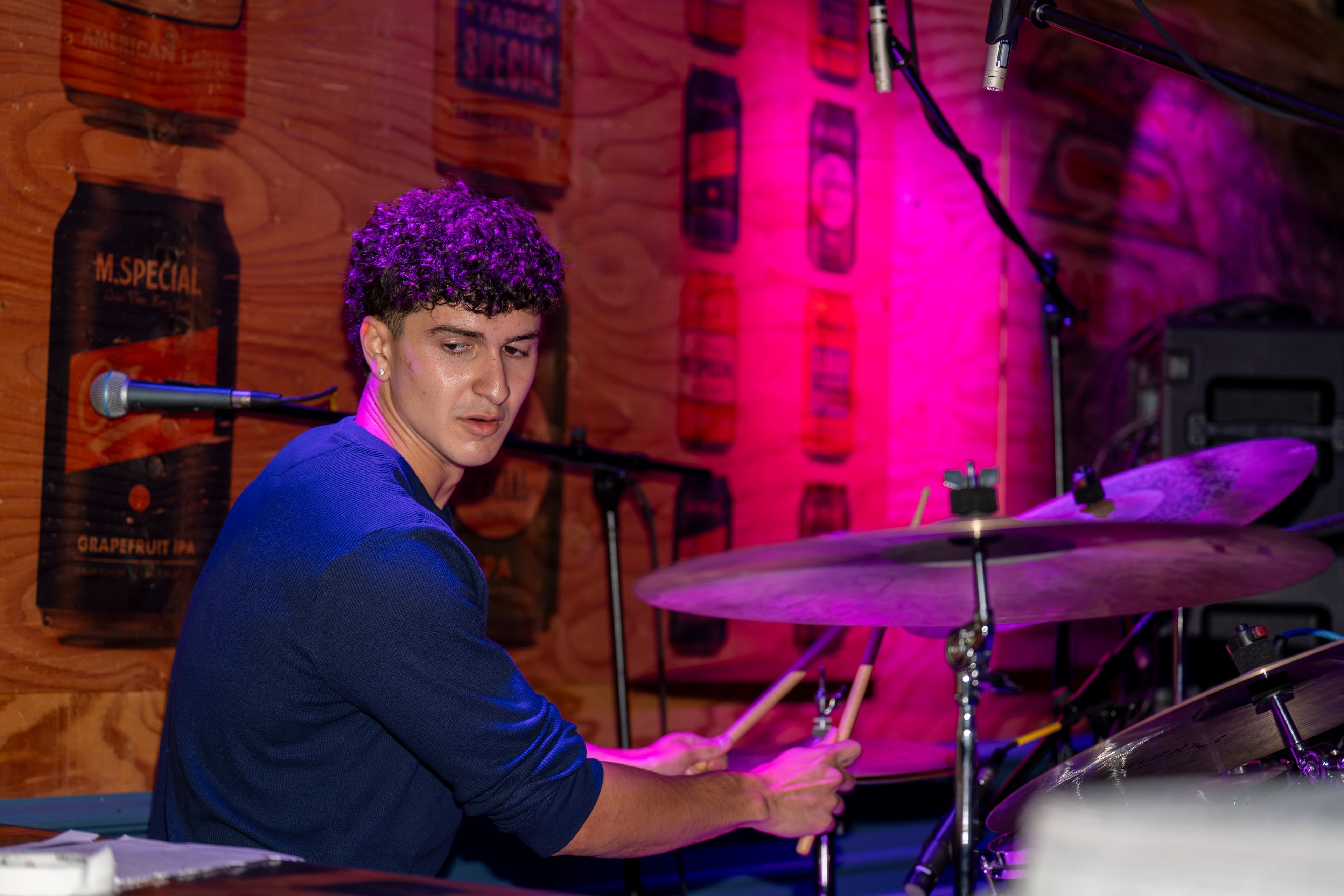
Lessons combine strong fundamentals with music students are genuinely excited to play. The exact focus will depend on each student's age, experience, and goals.
Technique & Coordination
Develop proper grip, posture, control, and coordination between the hands and feet.
Rhythm & Timing
Build a steady sense of time, understand common rhythmic patterns, and learn how to stay locked in with music.
Music Reading
Learn to read drum notation, count rhythms, and use written exercises to develop independence and accuracy.
Rudiments & Fundamentals
Practice essential sticking patterns and foundational exercises that improve speed, control, and musical vocabulary.
Beats, Fills & Songs
Apply new skills by learning drum beats, fills, and songs across rock, pop, funk, jazz, and metal.
Musical Confidence
Become more comfortable behind the drum kit, recover from mistakes, and play with greater confidence and expression.
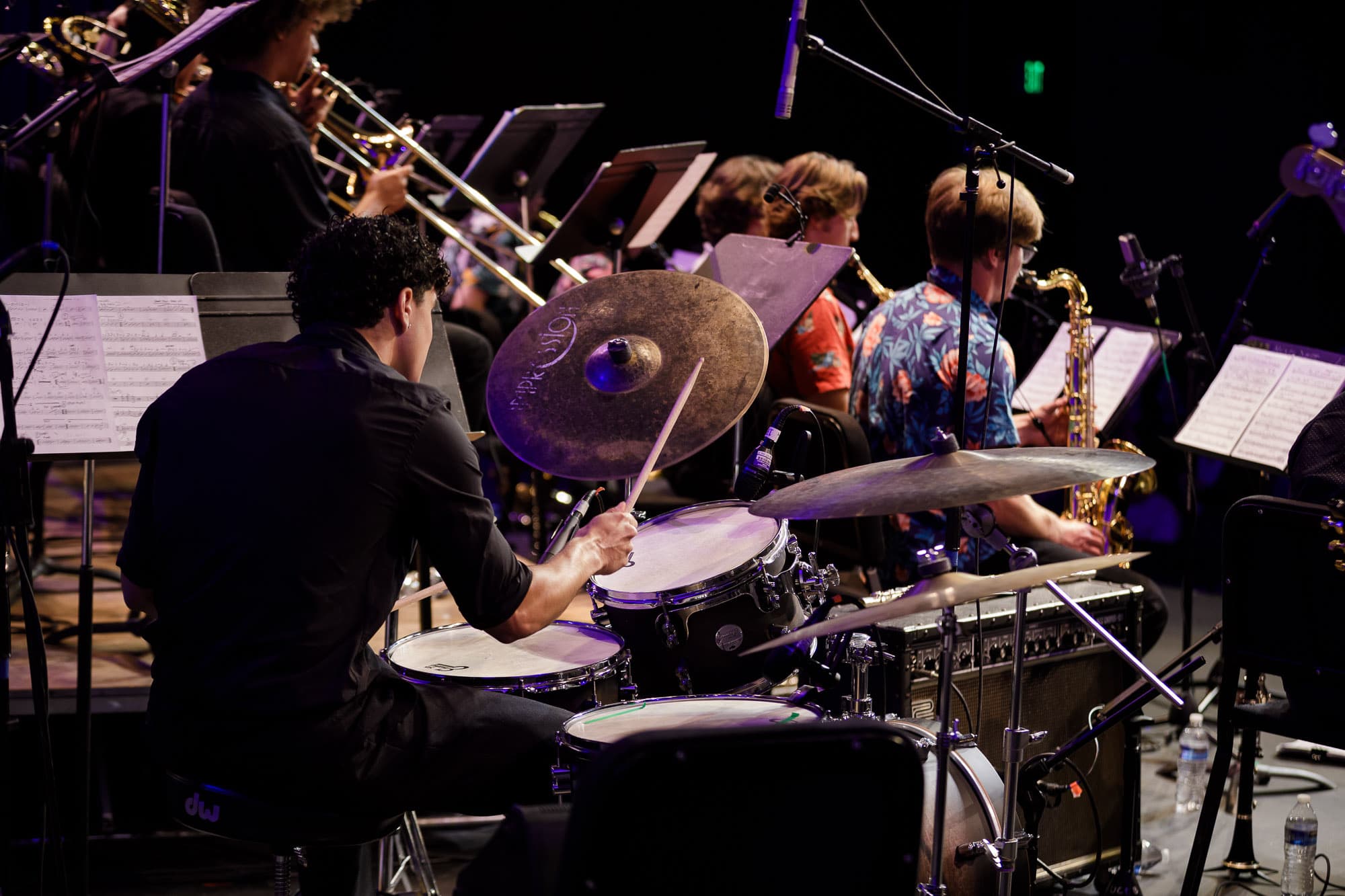
Reading charts with a big band
Styles Taught
Students are usually most motivated by the music they already love, so lessons lean into whichever of these a student is drawn to. Most people end up borrowing from several.
- Rock
- Solid backbeats, dynamics, and the groove vocabulary that most students want on day one.
- Pop
- Playing tightly to a song, serving the vocal, and locking in with a click or track.
- Funk
- Ghost notes, syncopation, and the hand-foot independence that makes a groove feel deep.
- Jazz
- Ride-cymbal feel, brushes, comping, and playing responsively with other musicians.
- Metal
- Speed, endurance, double-kick technique, and staying precise at faster tempos.
Practical Details
Starting From Zero
Most of the students I work with have never sat behind a drum kit before, and that is genuinely the best place to start. There is nothing to unlearn, and no assumed knowledge to catch up on.
A first-time student will not be handed a book of exercises and left to work through it. We start with how to hold the sticks, how to sit, and how to play one steady beat — then build outward from there at whatever pace feels right. Questions are always welcome, and there is no expectation that anything should click immediately.
Location & Equipment
Lessons take place at the student's home or another agreed-upon location throughout Santa Barbara and Goleta. We sort out the most practical arrangement when you first reach out, based on where you are and what you have available.
You do not need to buy a drum set before starting. What a student actually needs depends on where lessons happen and how they plan to practice — sometimes that is a full kit, sometimes just a practice pad and a pair of sticks. I would rather help a family figure out what is genuinely necessary than have anyone spend money on equipment they do not need yet.
What the First Lesson Looks Like
The first lesson is mostly about getting to know each other. We talk through the student's experience, the music they already love, and what they are hoping to get out of playing — whether that is a specific song, a general skill, or just curiosity.
We also start playing. I want every student to leave the first lesson having actually made some music rather than only talking about it. By the end I usually have a clear sense of how that student learns best, and we use that to shape where lessons go next.
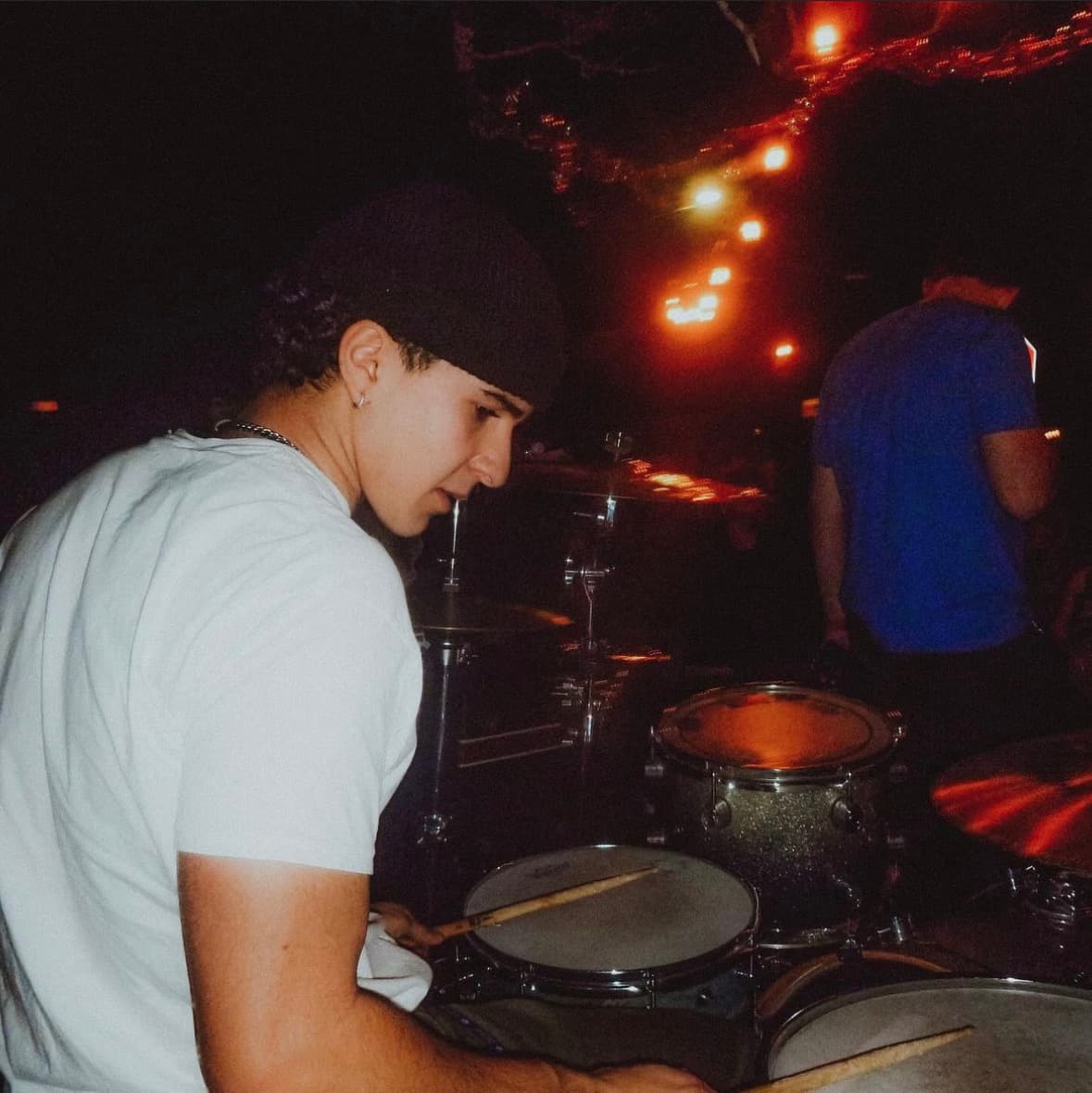
Ready for a First Lesson?
Send a message with a little information about the student, and I'll follow up to discuss goals, location, scheduling, and next steps.
Or reach out directly: lessons@ryanbadie.com · (949) 547-2161